
India Reality Check · Rivers
Why are so many Indian rivers polluted? Start with the sewage gap.
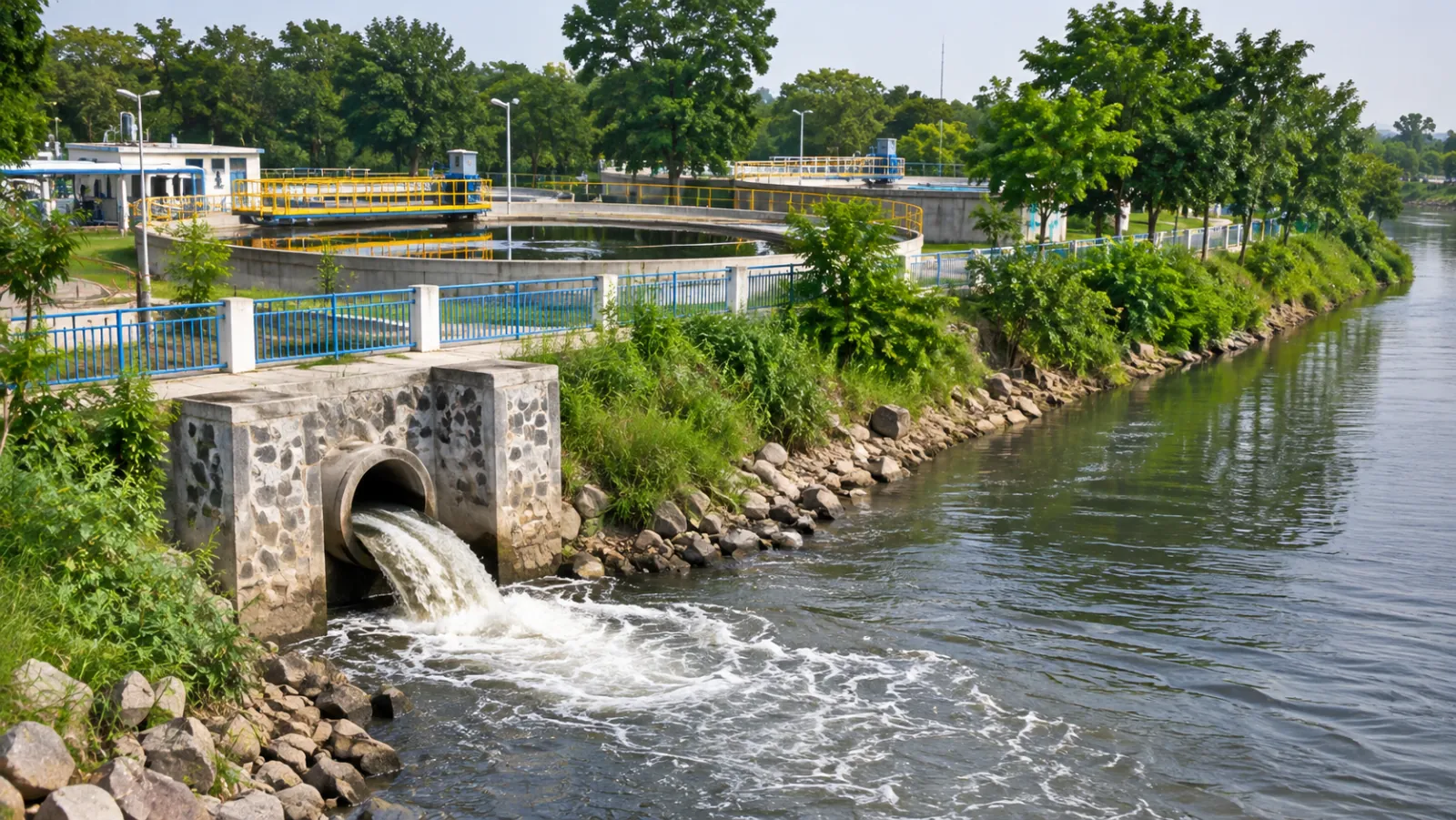
Cities make far more sewage than they can treat. The numbers show a gap, and the gap flows into the river.
This is an editorial draft. It has not yet been reviewed. Check its figures against the linked sources before relying on it.
What is the problem?
Many stretches of Indian rivers are too polluted for the uses people expect of a river: drinking water supply, bathing, irrigation and fishing.
What does the evidence show?
The Central Pollution Control Board's 2022 assessment found 311 polluted stretches on 279 rivers, using a water-quality test (BOD above 3 mg/L). That is down from 351 stretches in 2018. Separately, a CPCB report of March 2021 estimated that India's towns and cities generate about 72,368 million litres of sewage a day, while installed treatment capacity is about 31,841 million litres a day. A Rajya Sabha record lists operational capacity lower still, at 26,869 million litres a day.
Why does it matter?
Rivers are where many towns get their water and where many people earn a living. Untreated sewage carries germs and nutrients that make water unsafe and harm river life, so a treatment gap is a health and livelihood gap.
What causes it?
The most direct cause in these numbers is that treatment capacity does not match the sewage produced, and not every plant that is built runs at full capacity. Industrial discharge and farm runoff add to the load; CPCB tracks them separately and this explainer does not put numbers on them.
What can be done?
Build treatment capacity where the gap is largest, and make sure plants run. Publish river water quality stretch by stretch so progress can be checked. Residents can report dumping of sewage or waste to the State Pollution Control Board or on the government grievance portal (CPGRAMS).
Sources
- PIB: polluted river stretches, CPCB 2022 assessment (checked 13 November 2026)
- PIB (Jal Shakti): sewage generation and treatment capacity, CPCB March 2021 (checked 13 November 2026)
- Rajya Sabha record: operational sewage treatment capacity (annexure) (checked 13 November 2026)