हिन्दी

03 / 10

Civic Sense India

A better country begins with how we treat our shared spaces.

Shared spaces are treated as everyone's own.

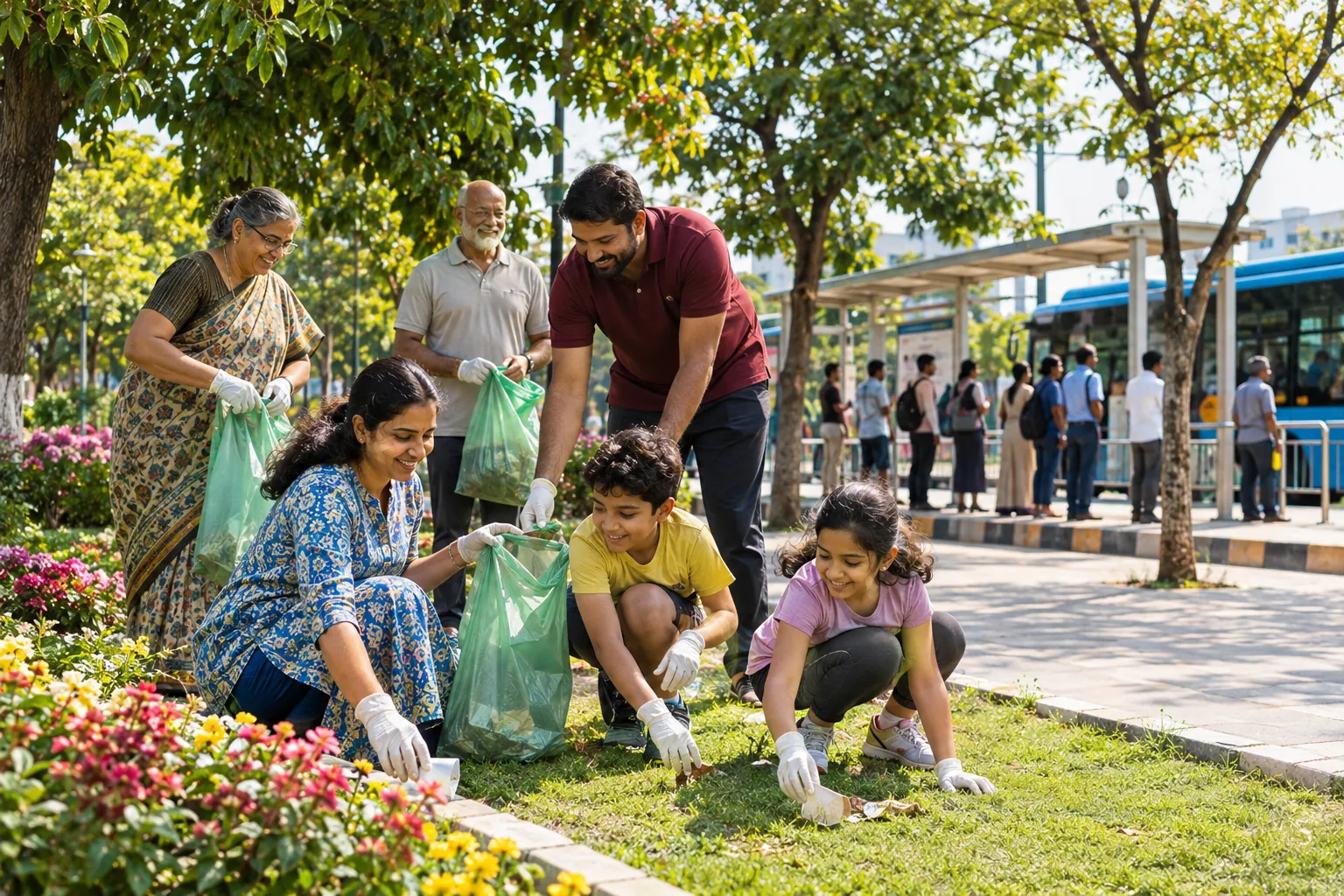
Neighbours and children pick up litter together in a small park, with an orderly bus stop behind them.AI-generated illustration

What good looks like

Shared spaces treated as everyone's own: queues, traffic rules, clean stairwells, respect for neighbours.

  • Streets, parks and stairwells kept clean by the people who use them
  • Queues, traffic rules and neighbours respected
  • Small habits that add up to a better city

Current problems

  • Waste is collected but not always treated, so it ends up in dumps and drains.
  • Shared spaces depend on everyone's habits, not only on the municipality.

Evidence and data

About half

Share of city waste that is treated

CPCB's 2020-21 report: over 95% of the roughly 1.6 lakh tonnes a day was collected, but only about half was treated (sources quoting the report give 47% to 52%).

Source: Central Pollution Control Board · 2020-21 · checked 13 November 2026

Figures from public reports; we are checking them against the latest releases.

Why this matters

A city is shared. Litter, noise and queues decide how everyone's day feels, and they start with small habits repeated by millions.

Possible solutions

  1. 1

    Separate waste at home

    The Solid Waste Management Rules, 2016 ask households to separate wet, dry and domestic hazardous waste.

  2. 2

    Look after the shared space you use

    Keep stairwells, parks and bus stops clean; wait your turn in queues.

  3. 3

    Ask your ward office

    Ask where your waste is processed and how to report a problem.

Positive Indian examples

Take part

Share Your IdeaShare this pageFile a complaint on CPGRAMS

Share an idea

What would make your city, or India, better? Tell us in a few words. We read every one.

We store only your words and the city you type. No name, no phone number. Read our privacy policy