
India Reality Check · Waste
Where does the waste go? About half of city waste is not treated.
Almost all of it is collected. Only about half is treated. What happens to the rest is the problem.
This is an editorial draft. It has not yet been reviewed. Check its figures against the linked sources before relying on it.
What is the problem?
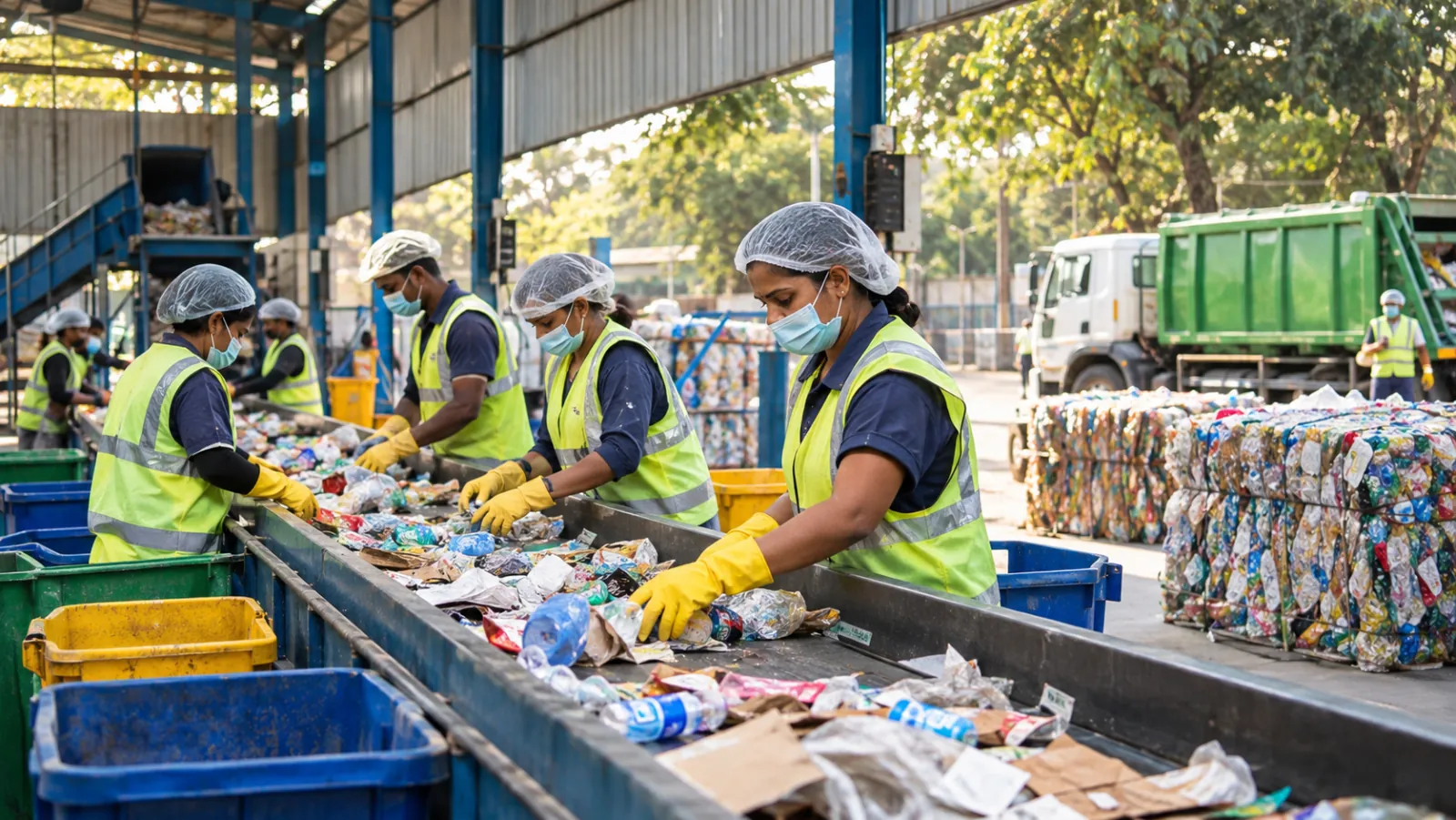
Collecting garbage is not the same as dealing with it. If waste is picked up but not treated, the problem is only moved somewhere else.
What does the evidence show?
CPCB's annual report for 2020-21 puts municipal solid waste at about 1.6 lakh tonnes a day. Over 95% was collected, but only about half was treated; sources quoting the report give figures between 47% and 52%, so we say 'about half'.
Why does it matter?
Waste that is not treated ends up in open dumps and drains. It can block drains, add to the burning of waste, and pollute land and water near where people live.
What causes it?
The Solid Waste Management Rules, 2016 require households to separate waste into wet, dry and domestic hazardous waste, and make local bodies responsible for collecting and processing it. Mixed waste is much harder to treat, and implementation varies from city to city.
What can be done?
Separate wet and dry waste at home. Ask your ward office or municipal body where your waste is processed and what the segregation rules are in your city. If collection or processing fails, you can complain through your municipal body or the government grievance portal (CPGRAMS).
Sources
- CPCB: annual report on municipal solid waste, 2020-21 (checked 13 November 2026)
- Down To Earth: Solid Waste Management Rules, 2016 (checked 13 November 2026)